
Walk into a room full of sharp-edged furniture and something in the back of your brain stays a little on guard, like the coffee table might bite if you're not careful. Swap those angles for a curve, and the whole space seems to exhale. At Hubbard and Hoke Furniture, it's one of the more interesting shifts happening in furniture right now, and it has nothing to do with trends and everything to do with how a room actually feels to be in.
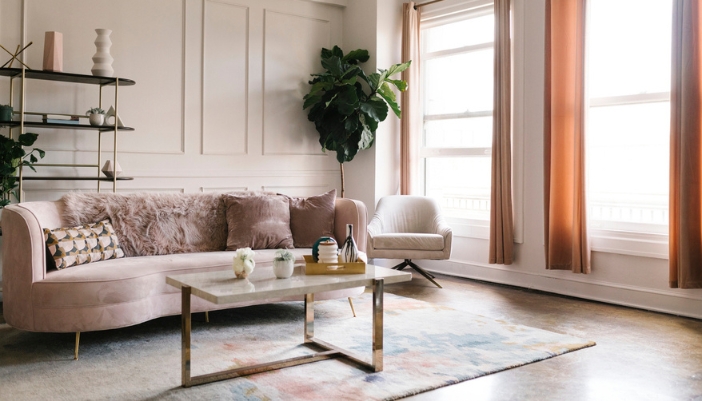
Rounded-Arm Sofas That Soften the Whole Room
Sharp, squared sofa arms feel formal even in the softest fabric. Round them out, and the same sofa suddenly feels like something you're allowed to flop onto. That shift in silhouette does more visual work than most people expect — a curved arm catches light differently and breaks up what would otherwise be one long straight line across a room.
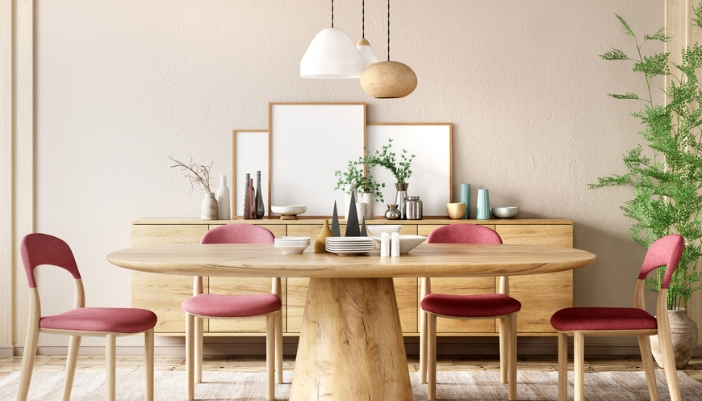
Oval Dining Tables That Open Up the Flow of a Room
Rectangular dining tables come with four sharp corners, and in a smaller dining area, at least one of them always ends up in someone's hip. An oval table removes that problem entirely — nobody has to angle around a corner to reach their seat, and the shape naturally pulls chairs closer for conversation. It also makes a tight dining space feel roomier, since there's no sharp edge eating into the walking path.
Arched Headboards for a Bedroom That Feels Less Rigid
Squared-off headboards act like a hard stop at the top of the bed. An arched one softens that line and pulls the eye upward instead, which makes a low-ceilinged bedroom feel a little taller. It's a small choice, but a curved headboard next to simple, straight nightstands creates just enough contrast to keep the room from feeling flat.
Curved Accent Chairs That Invite Conversation
Rounded backs and gently sloped arms make an accent chair sit differently in a room than a boxy one does — it turns slightly toward whoever's nearby instead of pointing straight ahead. That subtle angle makes a curved chair a natural pick for a spot where people gather to talk, rather than one that just fills empty corner space.
- A rounded silhouette softens a room instantly: Curved chairs feel less formal than square ones, even in the same fabric.
- Easier to angle toward a conversation: A curved back naturally faces inward instead of dead-on, which makes small talk feel less like an interview.
- Works in tight corners: The rounded shape avoids the sharp edge a square chair leaves jutting into a walkway.
Rounded Coffee Tables and Consoles That Are Easier to Move Around
Stubbed toes in the middle of the night usually come courtesy of a square coffee table's sharp corners. A round or oval version removes that risk and, in smaller living rooms, actually opens up usable floor space since there's no corner jutting into the walking path. The same logic applies to a curved console table against a hallway wall — foot traffic moves past without anyone turning sideways.
Curved Shelving and Cabinet Corners That Feel Less Boxed In
Straight, hard corners show up on most built-in shelving and cabinetry because they're simpler to manufacture, not because they look better. A shelf or cabinet with a rounded corner edge softens an entire wall of storage and keeps a room from feeling like it's made of stacked boxes. It's a small detail, but it changes how a whole wall looks at a glance.
Round Out Your Space, One Piece at a Time
You don't have to redo an entire room to feel the difference curves make — swapping one sharp-edged piece for a rounded one is often enough to change how a space feels to move through. If you're curious how a curved sofa arm or an oval table might work in your own layout, stop in with your questions, or browse the rounded sofas, oval tables, and arched headboards at Hubbard and Hoke Furniture, and the team can help you find the shape that fits your space.