
That antique piece you love shouldn’t feel like it’s fighting the rest of your room. When it does, it’s usually not the piece—it’s how everything around it is working together.
National Cherish an Antique Day is a good reminder: those heirlooms aren’t just for show. They’re meant to be lived with. When you mix them in with modern pieces, you get a kind of character and depth that new furniture just can’t offer.
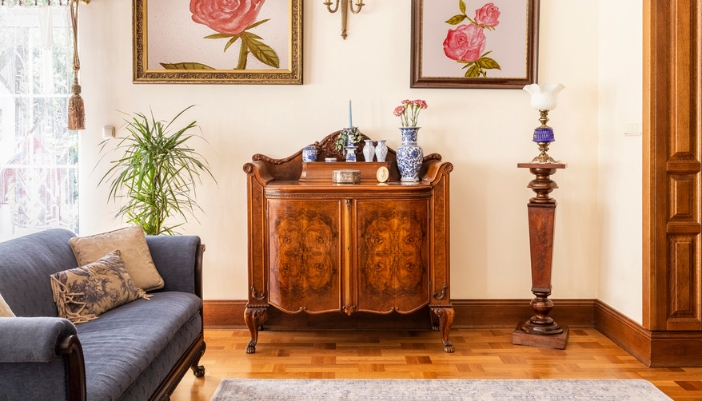
Start with Scale and Proportion
Most rooms don’t feel mismatched because of style. It’s usually that something is too big, too small, or just out of balance. When the scale feels right, antiques and modern furniture start to work together naturally.
- Match visual weight: A bulky antique dresser needs something equally substantial nearby, like a deep, well-framed sofa or a solid dining table, so it doesn’t feel out of place.
- Watch height differences: Tall antique hutches or headboards can tower over low-profile modern pieces if you’re not careful.
- Give your pieces breathing room: Antiques tend to carry more detail, so spacing them out helps them feel intentional instead of crowded.
- Balance the room, not pairs: You don’t need every piece to match in size—just make sure the overall room feels evenly weighted.
Use Wood Tones to Create Connection
Mixing different finishes might feel risky at first, but this is how a room starts to feel collected instead of just coordinated. The goal isn’t to match every piece. It’s to make sure everything feels like it belongs together.
- Look for shared undertones: Warm woods like cherry and walnut tend to play well together, while cooler tones like gray-washed and espresso finishes pair better with each other.
- Avoid “almost matching”: Pieces that are close in color but not quite right can feel more off than intentionally different finishes.
- Repeat tones across the room: If your antique table has a rich wood tone, echo it in another piece like a media console or bed frame to tie things together.
- Use contrast on purpose: A dark antique next to a lighter modern piece can create a layered, intentional look when it’s clearly different.
Pro Tip:
If your wood tones feel scattered, anchor the room with one dominant finish (often your largest piece, like a dining table or bed), then let other tones support it.
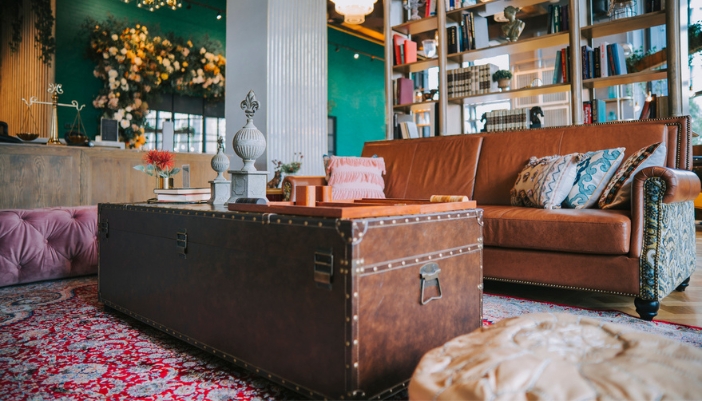
Balance Ornate Details with Clean Lines
Antiques bring in character with their curves, carvings, and details. Modern furniture is all about clean lines and simplicity. The real magic happens when those two styles balance each other in the same space.
- Let one style lead: If your antique piece is highly detailed, keep surrounding furniture clean and simple so it doesn’t feel overwhelming.
- Avoid stacking details: Too many carved or decorative elements in one area can make the room feel busy fast.
- Use contrast to highlight: A sleek sofa or minimalist bed frame can make an ornate antique stand out in the best way.
- Think in layers, not matches: You’re blending styles, not recreating a period room—variety is what makes it feel personal.
Anchor the Room with a Modern Foundation
Big furniture pieces shape how a room feels every day. When those main items are modern, everything else tends to fall into place more easily.
- Start with the big pieces: Sofas, sectionals, beds, and dining tables take up the most visual space, so their style carries the room.
- Use modern for flexibility: Clean-lined furniture adapts more easily when you introduce antiques around it.
- Keep comfort front and center: Modern upholstery and bed frames often offer the support and function people want for everyday use.
- Layer antiques around it: Once your foundation is set, smaller antique pieces can add personality without overwhelming the space.
Pro Tip:
If you’re unsure where to mix styles, keep seating modern and bring in antiques through accent pieces like dressers, buffets, or nightstands.
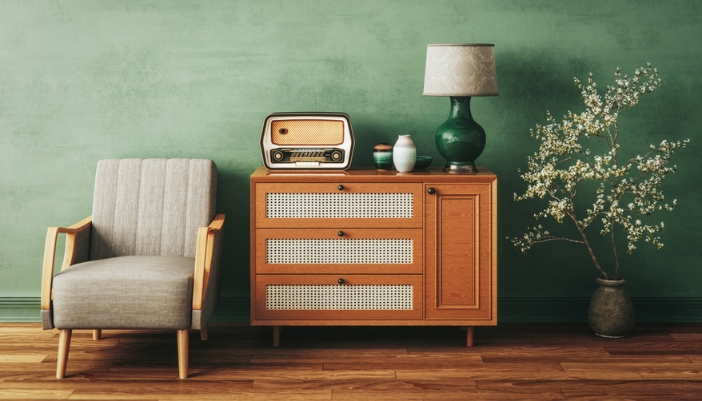
Let Statement Pieces Stand Out
Not every piece has to stand out. The most inviting rooms usually have one clear focal point.
- Choose your standout piece: Whether it’s an antique dining table or a vintage dresser, let one item take the spotlight.
- Limit competing features: Too many bold shapes or finishes can make the room feel cluttered instead of curated.
- Create a visual pause: Surround statement pieces with simpler furniture, so the eye has somewhere to rest.
- Think “collected,” not crowded: A few meaningful pieces will always feel more intentional than filling every corner.
Making the Mix Feel Like Home
The rooms that feel the most inviting usually aren’t perfectly matched—they’re layered over time. A mix of antique and modern furniture brings that lived-in feel, where every piece has a story but still works together. National Cherish an Antique Day is a great reminder to give those older pieces a real place in your home—not just as accents, but as part of how you live every day.
If you need guidance bringing your style together, our team at Hubbard and Hoke Furniture is ready to help you select modern pieces that enhance what you already love. Explore our collection to discover items that could seamlessly fit into your home.